
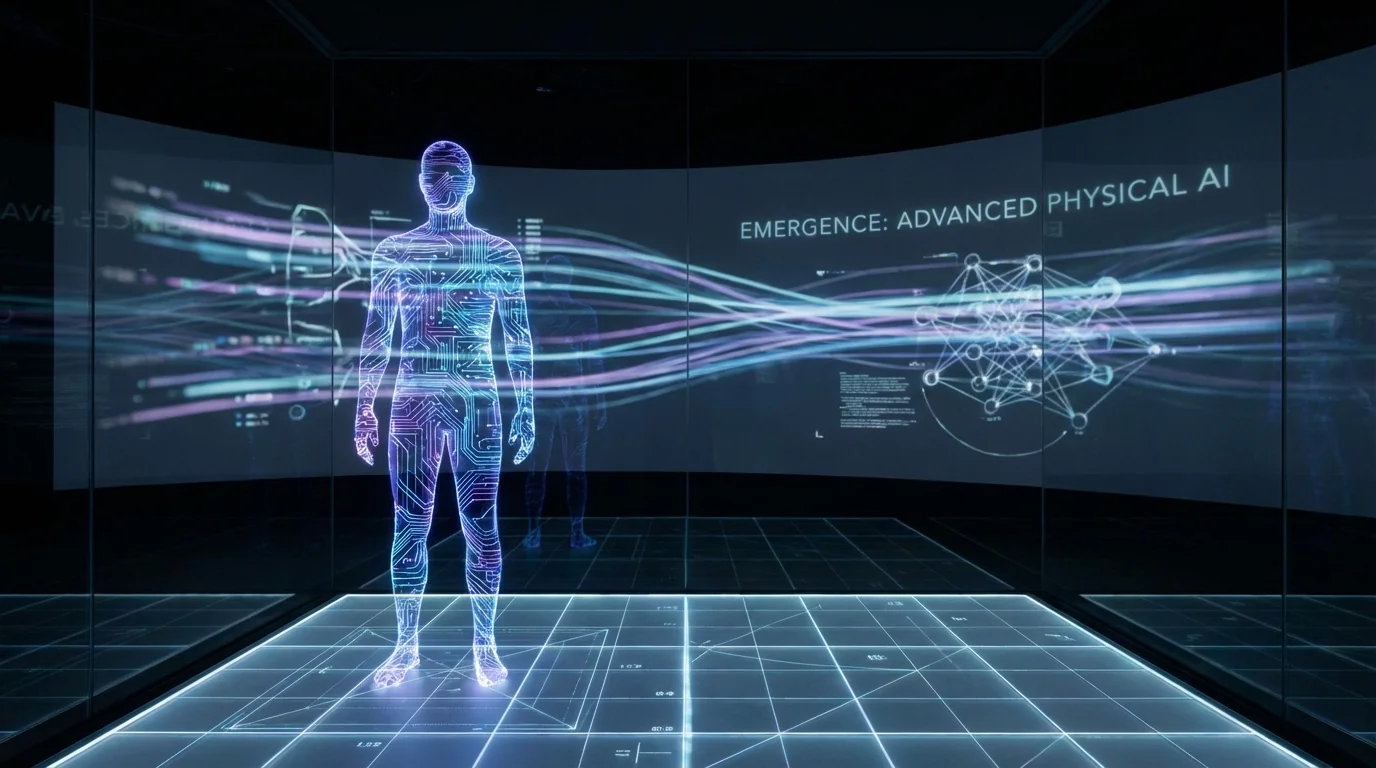
The robots are no longer just coming—they’re here, and they’re learning to walk, talk, and work right alongside us. In the shadow of glittering Las Vegas lights at CES 2026, while the world gawked at the latest foldable phones and transparent TVs, the real revolution quietly unfolded: physical AI is stepping off the screen and into the world. Forget the clunky, caged arms of yesterday’s assembly lines. Today’s robots are bipedal, sensor-laden, and powered by brains that learn from every move. As industry titans and tech upstarts alike race to unleash the next generation of intelligent machines, the question is no longer if robots will reshape our lives—but how soon.
From Sci-Fi to Shop Floor: The Humanoid Awakening
Just a decade ago, the notion of a humanoid robot reliably folding laundry, stocking shelves, or inspecting jet engines sounded like a fever dream. But in 2026, the fever has broken, and reality is catching up. Hexagon Robotics, in a bold move that signals the industry’s coming-of-age, announced a strategic partnership with Microsoft to bring humanoid robots out of R&D labs and onto the factory floor.
Their vision isn’t a one-off demo or a viral social media stunt. It’s production-ready humanoids, schooled in manipulation and inspection, built for the nuts-and-bolts world of automotive, aerospace, and logistics. By marrying Hexagon’s physical AI and robotics frameworks with Microsoft’s sprawling cloud and data platforms—think Azure IoT Operations and the real-time insights of Microsoft Fabric—the pair aim to leapfrog the slow, piecemeal pilots that have long dogged industrial robotics.
The magic ingredient? A cocktail of imitation learning (robots learning by watching humans), reinforcement learning (robots learning from trial and error), and multimodal models that fuse vision, language, and action. “This is about moving AI-driven robotics beyond pilots and into live industrial operations,” said the companies. In other words: the age of the humanoid co-worker has begun.
The Rise of Physical AI: When Machines Sense, Think, and Do
At this week’s Fortune Brainstorm Tech dinner at CES, the buzzword wasn’t just “AI”—it was “physical AI.” As Qualcomm CEO Cristiano Amon put it, “It’s going to be massive.” What’s changed? AI is no longer just parsing spreadsheets or translating languages. Now, it’s grounded in real-time sensory experience—seeing, touching, moving, and learning from the world.
Physical AI is what happens when digital brains meet physical bodies. Robots and autonomous vehicles are now trained not just on abstract data, but on the things they actually sense and do. As Amon explained, “You train on things that you see, things that you sense, things that you do.” This shift is making robots not only more capable but more adaptable—able to handle the unpredictable chaos of real-world environments, from bustling warehouses to crowded city streets.
The latest report from the International Federation of Robotics highlights this transformation. Analytical AI helps robots process mountains of data and anticipate problems before they arise—think predictive maintenance in “smart factories.” Generative AI, meanwhile, lets robots learn new tasks on the fly, simulating scenarios and generating synthetic training data. The real breakthrough comes when these approaches are fused in agentic AI: machines that can analyze, adapt, and act, all without waiting for a human to spell out every step.
Global Ambitions and Local Champions
If there’s any doubt that robotics is now a global game, look east. In Pune, Bharat Forge—a heavyweight of Indian manufacturing—just inked a deal with Germany’s Agile Robots to co-develop AI-driven automation for the next generation of “dark factories,” where robots hum along in near-total autonomy. Their partnership, aimed squarely at the booming markets of India and Southeast Asia, promises to bring vision- and AI-based systems to everything from cars to consumer electronics and healthcare.
Meanwhile, in Hong Kong, the city’s tech scene is basking in the afterglow of a record-breaking CES showing. The Hong Kong Tech Pavilion, a sprawling showcase of 61 local companies, drew crowds of global buyers and investors eager to glimpse the next wave of frontier innovation. The message: Asia is no longer just the world’s workshop—it’s a crucible of robotics R&D, with startups and giants alike vying for a place on the international stage.
And it’s not just corporate giants making moves. In Dallas, Addtronics is doubling down on homegrown talent, promoting Angie Keener and David Hopkins to lead its Bow Robotics and Custom Automation units, respectively. Their mission? To drive the next phase of growth in life sciences and other high-stakes industries, where high-quality automation is no longer a luxury but a necessity.
Training the Next Generation—and the Robots They’ll Command
Of course, all this hardware and software is only as good as the people who build and run it. That’s why IIT Delhi is expanding its executive-level robotics program, opening admissions for a new cohort of mid-career professionals hungry to master the latest in AI, IoT, and intelligent automation. The five-month curriculum, shaped by academics and industry experts from India and the US, blends robotics engineering with cutting-edge AI. The goal: to ensure a new wave of managers and engineers can bridge the gap between code and conveyor belt, algorithm and actuator.
And if you’re still picturing robots as little more than Roombas with attitude, think again. According to Goldman Sachs, the market for humanoid robots could hit $154 billion by 2035. The “robotic butler” is no longer a Jetsons fantasy but a fast-approaching reality. Companies like Tesla, Figure, and 1X are racing to build bipedal helpers that can tackle everything from household chores to elder care, promising not just convenience but a new kind of independence for millions.
The Human Touch in a Robotic World
So, where does all this leave us? The robots are coming, yes—but they’re coming to work with us, not just for us. As physical AI matures, the boundary between the digital and the tangible blurs. Machines are learning to sense, adapt, and act in the messiness of the real world, and the world’s factories, offices, and homes are about to get a lot more interesting.
The real story of robotics in 2026 isn’t just about silicon and steel. It’s about people—engineers, managers, workers, and dreamers—building the future, one sensor and servo at a time. The age of physical AI is here, and it’s just getting started.